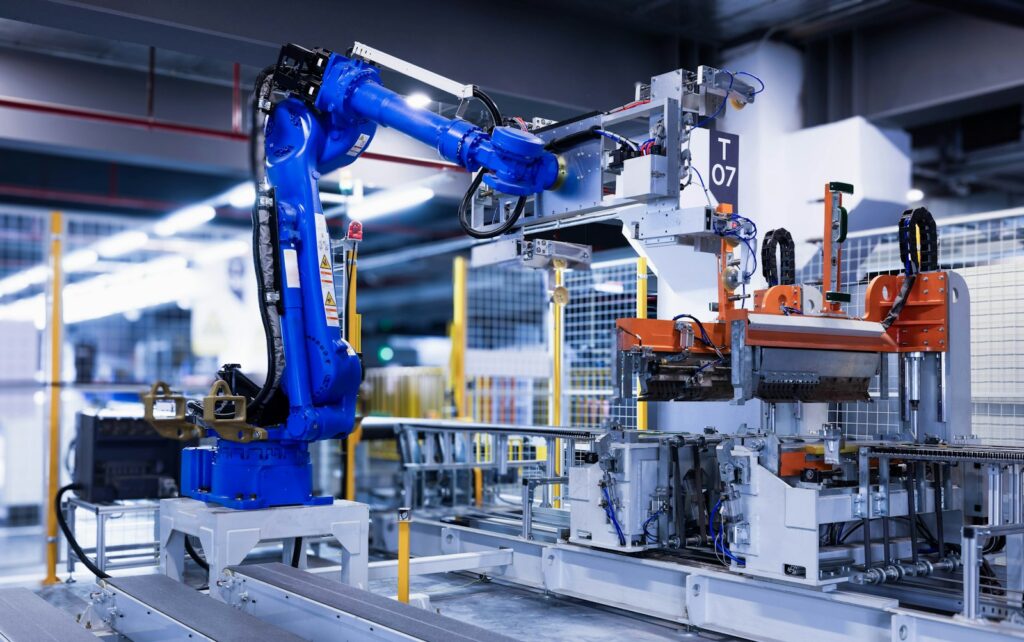
Photo by Agility
The Fremont site will operate as Agility’s software and capabilities hub. Engineering teams will train, test and improve the AI systems that allow Digit to learn skills and perform more complex tasks in customer environments. The facility complements the company’s RoboFab manufacturing operation in Salem, Oregon.
Agility said it will hire nearly 200 professionals in AI and machine learning software engineering, AI development and field operations. The central news is therefore both a property expansion and a workforce commitment designed to connect robot intelligence with commercial deployment support.
More than 300 million dollars in orders and 30 prospective customers
Agility reports active deployments with Schaeffler, GXO, Toyota Motor Manufacturing Canada and Mercado Libre. It also says it has secured more than 300 million dollars in multiyear orders for Digit v5, subject to the achievement of contractual milestones, and has a growing pipeline of more than 30 customers.
Those qualifications matter. An order figure tied to milestones is not the same as recognised revenue, and a customer pipeline is not a completed contract. Even so, named deployments across manufacturing, logistics and distribution provide evidence that the company is testing its humanoid platform in real enterprise environments rather than only in laboratories.
The company is expanding ahead of a planned public listing through a business combination with Churchill Capital Corp XI. Agility said the proposed transaction will be submitted to Churchill XI shareholders and will require the relevant registration and disclosure process.
Physical AI creates a software market around the machine
Agility positions Digit for repetitive and physically demanding tasks in warehouses and manufacturing facilities. The commercial challenge is not only teaching a robot a task. Customers also need integration with warehouse systems, safety procedures, identity and access controls, performance reporting, maintenance processes and exception handling.
That expands the addressable opportunity for SaaS businesses. Independent software providers may not need to manufacture robots to participate. They can provide fleet coordination, digital twins, task scheduling, compliance records, training data operations and human escalation interfaces across mixed automation environments.
Analysis: the integration layer may be more accessible than robotics hardware
ThePionairs.com editorial analysis: founders should read the facility expansion as evidence that physical AI requires substantial software and field operations capacity after the hardware exists. The opportunity is to build tools that connect robots with existing operational systems and quantify productivity. The risk is long sales cycles, site specific integration and dependence on a small number of hardware platforms.
The second order opportunity is a new enterprise software category around robot governance, utilisation and cross vendor orchestration. The risk is that promised orders convert slowly if customers delay deployments or milestones are not met. ThePionairs Operator Verdict: Watch because the software ecosystem is becoming commercially relevant, but smaller vendors should validate demand with one workflow and one site before scaling.
More information
Source and more information: Agility Robotics press release