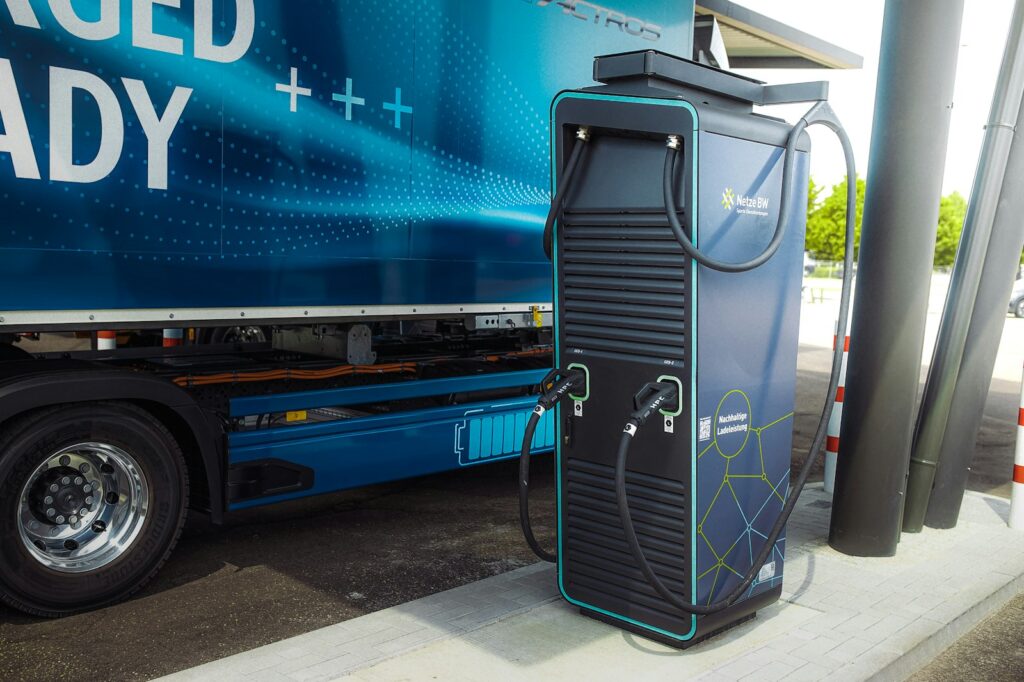
The system reads information across telematics platforms, charging systems, maintenance tools and email to create an operational picture of a fleet. It can then take predefined actions instead of simply presenting another alert. Examples supplied by Einride include autonomously rebooting a stalled charger, creating a vendor ticket with diagnostic data and notifying fleet managers about projected delays.
That distinction matters commercially. Electric fleet growth creates additional software complexity because vehicle availability increasingly depends on the interaction between transport operations, charging infrastructure, energy availability and maintenance systems.
The central development is therefore the availability of an automation layer designed to act across those systems rather than requiring a dispatcher to diagnose every exception manually.
Charger failures expose a repeatable operational bottleneck
Einride says Flip AI is available to all fleet and charging operations, rather than only customers using Einride’s wider freight services. The technology builds on capabilities already used inside its Saga AI platform and on Flipturn’s charging-management experience.
What has been validated is product availability and the range of actions the system is designed to automate. What remains unproven publicly is how much downtime, staffing cost or vehicle utilisation improves for third-party fleets.
Those economics should determine whether smaller operators adopt agentic fleet management.
The opportunity: exception automation for smaller electric fleet operators
ThePionairs.com sees the strongest opening for EV charging integrators, fleet-management software companies, telematics specialists and regional logistics consultants.
Smaller commercial fleets increasingly use several disconnected systems but often lack a large operations centre. That creates room for specialist providers to package one automation layer around expensive exceptions: chargers that fail before morning dispatch, vehicles whose battery level threatens a delivery schedule, or maintenance events that require coordination between multiple suppliers.
The first practical move is to identify one fleet with at least several vehicles and chargers and map every manual action triggered by a charging problem during a month. Build or configure automation around the highest-frequency exception rather than trying to automate the complete operation.
Measure avoided downtime, human interventions and false automated actions over approximately 30 days. The main reason not to proceed is integration complexity: if every customer uses sufficiently different chargers, telematics systems and maintenance processes, implementation costs may destroy the recurring-software economics.
A second-order opportunity is operational benchmarking. A provider serving several fleets could eventually identify which charger, vehicle or site configurations generate the highest intervention costs and turn that knowledge into optimisation services.
More information
Source and more information: Einride Launches Flip AI, One of the First AI Agents for Electric Fleet Operations