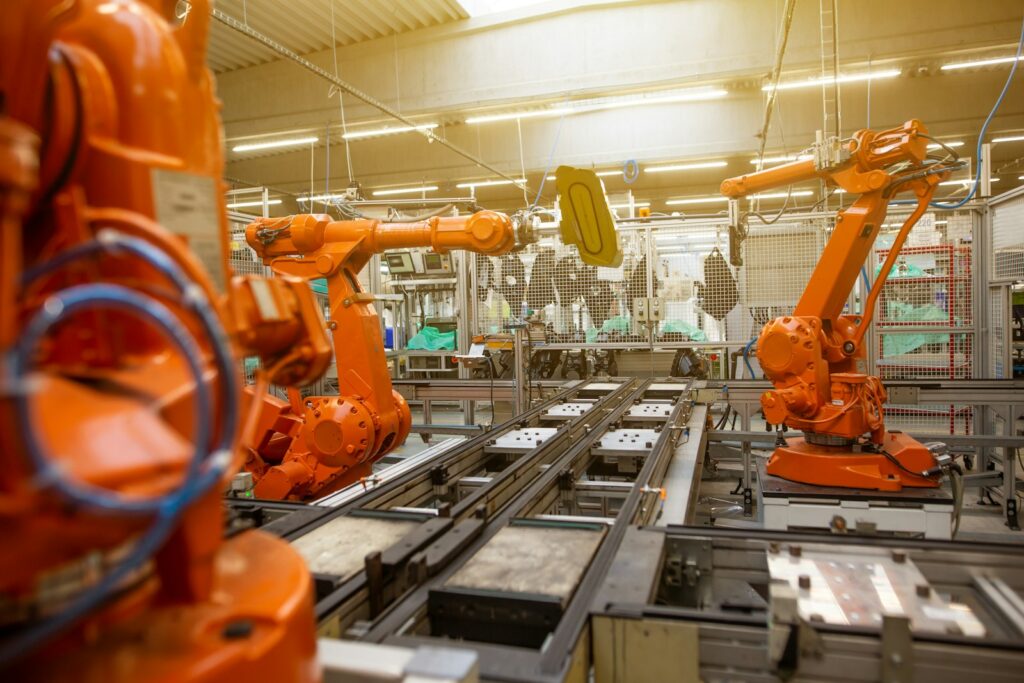
The company trained Isaac using three trillion multimodal tokens, including one million hours of general video and 100,000 hours of robotics-oriented experience spanning more than 35 robot systems.
Perceptron has released the model weights alongside fine-tuning and inference code, making it possible for external teams to evaluate and adapt the technology rather than buying access only through a closed API. It also offers commercial support for companies moving the model into production.
The company reports 97.2% average success on the LIBERO manipulation benchmark and says the model compares favourably with several other open robotics systems. Those results come from Perceptron’s release and technical evaluation and should not be interpreted as proof of equivalent performance in factories or warehouses.
The commercially important development is the availability of another sophisticated robotics foundation layer that smaller companies do not need to create themselves.
35 robot systems widen the starting point for adaptation
Perceptron says the same model can support video analysis, grounding, task-progress monitoring and both continuous and discrete robot control. It is already working with companies across manufacturing, logistics, warehousing, security and mobility.
What remains unproven is how much engineering and proprietary demonstration data individual customers will still need before a workflow becomes reliable enough for production.
That integration gap is where SMEs can compete.
The opportunity: narrow automation for constrained industrial tasks
ThePionairs.com sees the strongest opening for robotics integrators, industrial computer-vision firms and manufacturing-software founders with access to a particular production environment.
Instead of attempting general-purpose robotics, choose one physical workflow with repetitive inputs and clear success criteria: pallet inspection, component sorting, machine loading, warehouse checking or progress monitoring.
The first practical move is to capture representative video and task demonstrations from one customer and determine how far the open model gets before substantial custom development is required.
Run a 30-day prototype using a controlled environment and track successful task completion, human interventions and engineering hours per improvement. The main reason not to proceed is integration cost. If the model requires extensive retraining for every new site, the business may remain engineering services rather than scalable software.
The second-order opportunity is reusable vertical adaptation. A company that learns how to make an open robotics model reliable across one class of machines or warehouse task can build proprietary data, tooling and deployment expertise without carrying foundation-model training costs.
More information
Source and more information: Perceptron AI Launches Isaac 0.5, a Frontier Open-Weight Robotics Model