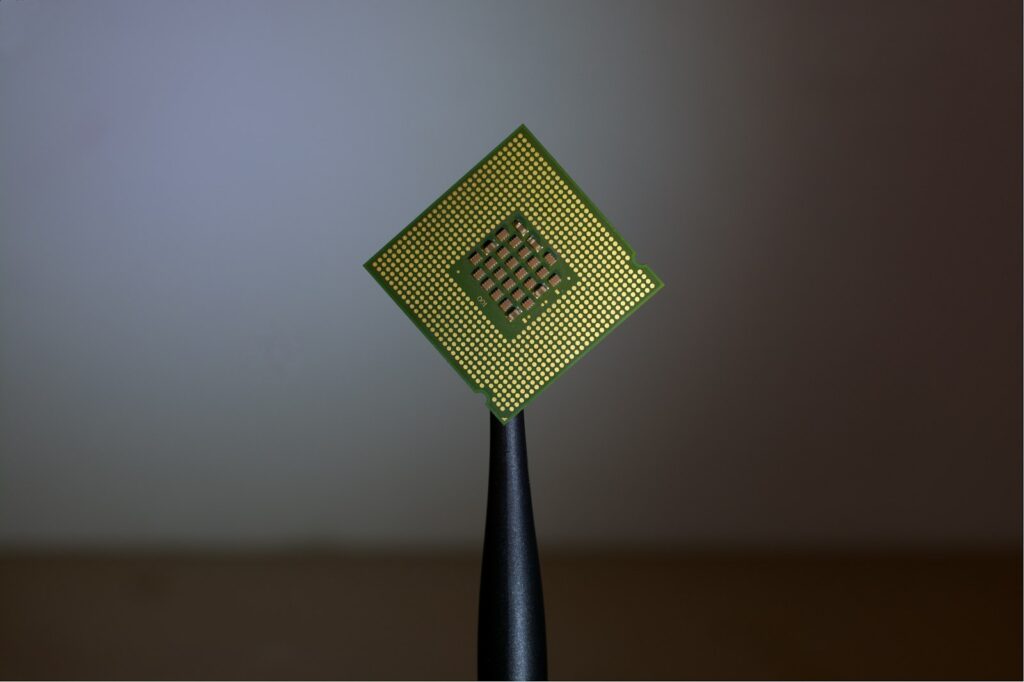
Customers can combine ARM instances with existing x86 environments, dedicated GPU infrastructure, public clouds and customer-owned systems through OpenCloud. US Signal also provides its own connectivity and data-centre infrastructure around the platform.
The central development is not that ARM servers are new. It is that another commercial cloud provider is explicitly packaging them for production AI workloads where GPU infrastructure may be unnecessary.
For AI SaaS businesses paying inference bills every month, infrastructure selection increasingly becomes a margin decision rather than merely an engineering choice.
Consumption pricing makes GPU alternatives easier to benchmark
US Signal offers multiple ARM instance configurations and says the service carries a 100% uptime SLA alongside US-based support. The company argues that customers can assign different workloads to ARM, x86 or GPUs according to requirements instead of adopting one architecture across their AI stack.
What has been validated is commercial availability and hybrid integration. What has not been independently demonstrated is a specific cost saving over GPU or x86 infrastructure for a representative AI workload.
Founders should therefore benchmark rather than accept architecture-level price-performance claims.
The opportunity: margin optimisation for inference-heavy AI SaaS
ThePionairs.com sees an opening for AI SaaS companies with meaningful recurring inference volume, plus MSPs and infrastructure consultancies managing those workloads for customers.
RAG retrieval services, embedding pipelines, smaller models and supporting APIs may not require expensive accelerator capacity throughout the entire request path. Separating these components can potentially reduce infrastructure cost while leaving GPUs available for tasks that actually need them.
Infrastructure specialists can productise this work as an AI cost audit, earning fees by identifying over-provisioned compute and sharing in verified savings.
The commercial value comes from measurable margin improvement rather than selling a particular processor architecture.
Analysis: benchmark one production workload across three architectures
Select a high-volume component with stable performance requirements and run the same workload on current infrastructure, ARM and an appropriate alternative. Measure cost per 1,000 completed requests alongside latency and error rate. This is the highest-value first move because architecture migrations should be justified by production economics, not theoretical benchmark performance.
Run the comparison for 30 days using a controlled portion of real traffic. Stop if engineering overhead, software compatibility or latency absorbs the infrastructure saving. A second-order opportunity is offering continuous workload routing that selects compute architecture according to cost and performance.
More information
Source and more information: US Signal Expands OpenCloud Platform with ARM Compute for Modern AI Infrastructure