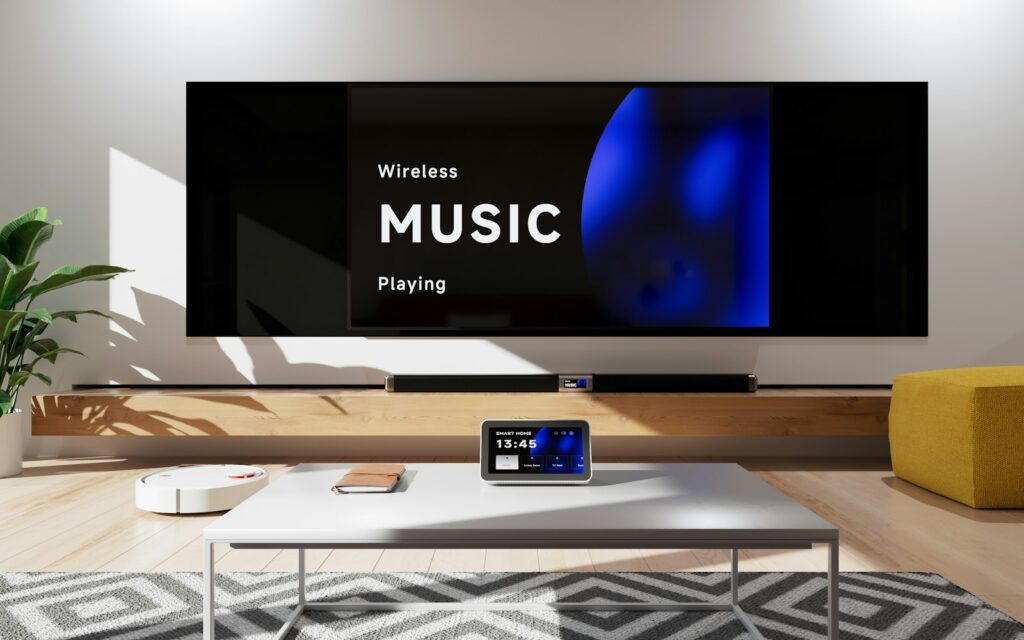
The platform combines NAS-style local storage with AI computing and connected-device control. It runs UGREEN’s Linux-based UGOS Pro operating system and can connect UGREEN devices including cameras, speakers and smart displays alongside third-party equipment supporting the Matter standard.
Three principal hardware products are planned: the HomeAgent HA100, HA100 Pro and the higher-end MasterAgent MA100, which uses NVIDIA Jetson Thor hardware.
UGREEN says HomeAgent can handle intelligent file management, local home monitoring, voice-driven automation and device coordination while keeping information stored locally.
Pre-orders opened September 4, ahead of a Kickstarter campaign scheduled for October 27. That means the commercial product is still at an early stage; widespread customer adoption and real-world performance have not yet been established.
Local storage plus AI changes what can remain inside the customer’s premises
The useful signal extends beyond smart homes.
Most AI SaaS has been designed around cloud inference: customer information travels to remote infrastructure, a model processes it and the result returns to the application.
Local AI hardware creates another architecture.
Small professional firms could eventually run document processing locally. Retailers could analyse camera information without continuously uploading footage. Workshops and factories could operate visual monitoring on premises. Hospitality companies could create voice or building-control applications that continue functioning when internet connectivity is unreliable.
The opportunity for smaller software companies is not manufacturing competing hardware. It is developing applications that use increasingly standardised local computing.
A vertical SaaS founder can start by identifying customer workflows where cloud AI creates a specific objection. Privacy concerns, bandwidth, latency and unpredictable inference spending are measurable reasons to consider local processing.
A legal-document provider, for example, could test whether a local model can perform classification or retrieval sufficiently well for a small law firm while sensitive source documents remain inside the office.
The relevant comparison is not whether the local model achieves the highest benchmark score. It is whether it delivers acceptable performance at a lower operating or compliance burden.
The main risk is fragmentation. Local AI devices will differ in hardware, operating systems, model support and available memory. Building separately for every appliance could reproduce the compatibility problems of early IoT.
Matter compatibility in UGREEN’s smart-home layer is therefore worth watching, as are broader standards for local agent execution.
If common interfaces emerge, local AI could become another deployment target for SaaS developers alongside cloud and mobile. Smaller vendors that learn to split workloads intelligently between local and hosted models may be able to serve customers that cloud-only AI products cannot reach comfortably.
More information
Source and more information: Bringing Local AI Home: UGREEN Introduces Privacy-First HomeAgent for Smarter Living