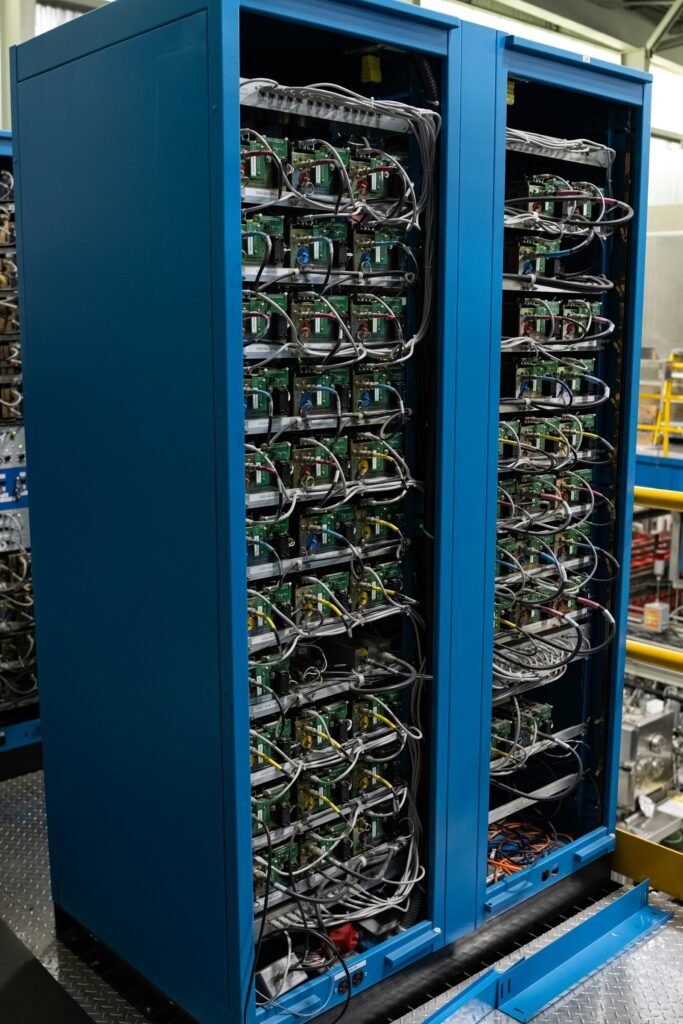
The public funding totals 201 million euro: 71 million from EuroHPC JU, 70 million from the Dutch government and 60 million from Nij Begun. Of that, 64 million euro is set aside for the supercomputer itself, a figure that according to reporting by The Next Web no longer covers what was originally planned.
Installation is scheduled for 2027, with the system expected to be fully operational by early 2028. The June 2025 plan had targeted full capacity in early 2027, so the timeline has moved by roughly a year.
SURF says virtually all waste heat will be reused through a connection to WarmteStad, that no surface or drinking water is used for cooling, and that the data centre’s existing grid connection means hosting the system adds no further grid congestion.
201 million euro arrives before the compute does
What has been established is the location, the funding structure and the consortium behind it. What has not been established publicly is the machine’s capacity, its pricing for commercial users, or the conditions under which a company will be able to buy time on it.
That gap matters, because the centre of expertise attached to the AI Factory is already supporting its first projects while the hardware is still years away.
For Dutch software companies the practical question is therefore not whether to wait for the machine. It is whether the work that makes such capacity useful can begin now: structuring proprietary data, deciding which model work genuinely requires domestic infrastructure, and establishing who inside the company can actually specify a training or fine-tuning job.
Companies working with regulated or sensitive data have the clearest case. Healthcare, public-sector, legal and industrial customers frequently cannot move source material through foreign public AI services, and a domestic facility is one of the few routes to running larger workloads without that transfer.
For many others the economics will not favour it. Inference for most commercial SaaS products remains cheaper on existing cloud providers, and national supercomputing capacity is typically allocated through application processes rather than simply purchased.
The useful first step is a small one. Document one model workload the business cannot currently run, establish precisely why, and approach the AI Factory’s expertise centre while the allocation rules are still being written.
More information
Source and more information: SURF – AI supercomputer housed sustainably at Eurofiber in Groningen
Supplementary source: The Next Web – Netherlands picks Groningen data centre for its 201 million euro AI factory supercomputer